

I am currently in a doctoral program, studying semiotics—cultural symbols—which requires a great deal of reading. Probably the greatest benefit of an education is the wise guide (teacher) who can give a curated tour of the best there is in any given subject, and such is the case with this program. Dr. Leonard Sweet has opened the door to an entire world of scholars and theologians who look beneath the surface of things and reveal mysteries. Now I would like to open that world to you.
The Real Thing
One of the key semiotic challenges is to distinguish the difference between the “spirit of the age” and the “signs of the times.”
Leonard Sweet, Decoding the Divine: Unveiling the Sacred Through Semiotics, 46
This was the first place I had to stop. Coca Cola was able to understand the difference, and their song is still remembered to this day—I tested it over the weekend, and everyone I talked to knew the song. In the midst of political and military conflicts (namely Viet Nam, but there were others) all over the world, Coca Cola read the spirit and the signs. What people wanted was love and harmony.
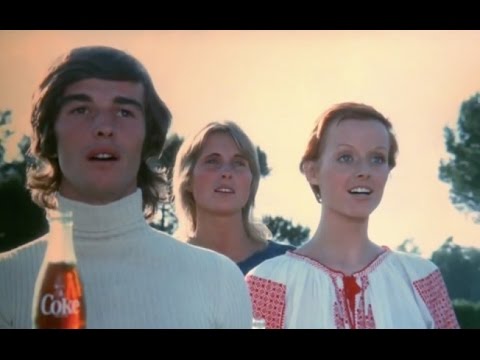
That is the prophetic attunement semioticians must have. So how do we do that?
Our Wild and Precious Lives
Later in the book, Sweet quotes from a favorite poet of mine, Mary Oliver, from her poem “The Summer Day.” In it, she urges her readers to live our lives with intention and appreciation for how very precious and brief life really is. She asks,
What is it you plan to do with your one wild and precious life?
Leonard Sweet, Decoding the Divine: Unveiling the Sacred Through Semiotics, 112, quoting Mary Oliver
Rather than plan, Sweet encourages us to be ready for anything, to be prepared, to be resilient and flexible, for that is true discipline, not the rigidity of rules and schedules, nor even of ideologies and philosophies. Remaining a student, being willing to have our minds changed as we entertain alternative perspectives, keeps us surrendered to what the Lord is doing right now around us (p. 114).
That is why one has to remain flexible and ready to change, since, as the data is gathered, the pattern might really change shape. This is something archaeologists are familiar with and why they have taken to being tentative with their findings (pp. 79, 114). The danger is to see causation where there is only correlation, so, experimenting with making connections in scripture means being open-handed with the story line, it has to support the metanarrative, and also honor all the data.
The Importance of Story
I really resonated with Sweet’s caution that dogma and doctrine are often pressed onto a story to understand it, rather than allowing theology to arise naturally from the story. This is the chief reason I prefer biblical theology over systematic theology.
But this is what really got me thinking.
Control the story, control reality itself. Control the story, and you hold the master key to all forms of power
Leonard Sweet, Decoding the Divine: Unveiling the Sacred Through Semiotics, 181
This is what Goliath was attempting to do, and which David flipped. Goliath’s script made Israel the losers automatically, and even the Israelites believed it, because their tallest person, Saul, was still too short to fight the Philistine giant. But David came with a completely different script in which muscles, spears, shields, and swords were immaterial, and God-guided stones through the power of David’s honed skill were the surprise upset of the battle.
The Philistines thought they had that battle sewn up with their script, never thinking that slingshots could outdo a giant with an eighteen-pound spear with a shaft like a weaver’s beam. Saul tried to get David to go out in Saul’s armor, surely hoping the Israelites would think their tall king was finally rising to battle. But David was in a new script, one that did not deal with armor and swords. Striding out to battle as he fit the stone into the sling and swung it gave Goliath’s shield bearer no chance to raise the shield high enough to protect Goliath, and anyway, shields were not meant to protect the forehead.
(You can find the story of David and Goliath in 1 Samuel 17)
Thinking about that is helping me to think about how important narrative really is.
Trust and truth can become perilously corroded by ratcheting terrors. We can easily see connections between things that are unrelated, and we quickly conclude causation where there is only correlation (p. 129).
Humans are, as Aristotle’s categories and Linnaeus’ taxonomies make clear, more splitters than lumpers. We love to take apart, to parse and perfect precise definitions, we assign categories, as the first Adam did in the naming of the animals. Sweet, instead, says to trust the story.
Control the story, control reality itself. Control the story, and you hold the master key to all forms of power.
And perhaps nowhere is this power more poignantly missed than in Christianity’s central narrative. We have taken the most compelling story ever told—a divine being who chose humanity over heaven, love over power, sacrifice over domination—and dismantled it into bullet points and bloodless propositions. We’ve turned a revolutionary drama of cosmic proportions into a theological textbook.
Leonard Sweet, Decoding the Divine: Unveiling the Sacred Through Semiotics, 181
The Heart of The Story
This is perhaps the central theme of Decoding the Divine, and it is fittingly found in the heart, the center, of Sweet’s book. The Church is a living being, as diverse as our many parts are, we are the very Body of Jesus here on earth, an organism that was born two thousand years ago on the ancient festival day of Shavuot, commemorating the giving of the Torah (Law) to Moses on Mount Sinai, and the grain harvest.
As all Jerusalem swelled with the incoming diaspora to celebrate the giving by God of their soul food and body food, God poured out God’s Spirit in wind and fire on 120 men and women, hidden and praying together in a spacious upper room, like a womb waiting for birth. And suddenly, out from that room came a new life form, the physical body of Jesus incarnated within them.
This was a spectacular and entirely unforeseen way that God fulfilled God’s promise through the prophet Ezekiel,
I will give them one heart and put a new spirit within them; I will remove the heart of stone from their flesh and give them a heart of flesh …
Ezekiel 11:19 NRSVUE
For Jesus, the very embodiment of Torah, now dwelt within the hearts of every one of those men and women who came streaming out of that room in the middle of Jerusalem. How do we tell that story? The story of Jesus among us, of resurrection and new life, the story of redemption?
Like ambassadors, we will need to visit the cultures of those we wish to tell this story to, in an “immersive experience” that will enable us to speak in their language and metaphors (p. 190). Think of the cultures that surround us, of children and teens, Republicans and Democrats, homeschool families and public school families, of yacht clubs and Elks lodges, the rural and the urban settings. Every enclave has its own culture, language, and memes.
And in that immersive experience, we not only look to see what is there, we look to see what lies beneath and ahead (p. 193–196). So often, we are not able to see the obvious, so we need each other for help, very like the tradition Paul gave to the churches, “Let two or three prophets speak, and let the others weigh what is said” (1 Corinthians 14:29). As Sweet says,
… faith communities realize that the demand isn’t for theatrical worship or polished presentations but for genuine community, for faith practices where everyone can participate, for an authentic engagement with the divine narrative.
Leonard Sweet, Decoding the Divine: Unveiling the Sacred Through Semiotics, 198
Read the Story
So then, in telling the story we must know the story.
Text
Focus on textual analysis, where every word and nuance is studied, reveals the things that, at the writing of the text, went without being said, but which we now must know because we no longer think and live in that milieu (p. 256)
Critical Thinking
We begin with logic but also curiosity. If the same questions are always asked, the same answers will tend to emerge. So we ask new questions, perhaps the kinds of questions that allow us to “debate meanings” and “reason through implications” (p. 256). This enables us to discipline our imaginations by making sure we remain faithful to the text itself as well as to the text’s context.
Interpretation
New perspectives and a creative reading of the passage reveal a variety of ways to understand what the text is saying (p. 256). This broadens our understanding of what the passage might contain not just for us, but others who come to the text for meaning. We have our audience, but truth-seekers and truth-tellers have their audiences. What is relevant for them may also carry some relevance for us, and for our own audience.
Exhaustive Discussion
We must both listen, receive, and respond, share. In this back-and-forthing is the dialectic that will bring us to new understandings (p. 257).
Fascination Tidbits
They are far too numerous to mention, a classic characteristic of a Leonard Sweet work. Here are three that I have been mulling over.
- Triadic Thinking: I was utterly fascinated with triadic thinking! That meaning is what people understand it to be (p. 147).
- Möbius strip of myth and truth (p. 169). Just make a Möbius strip and write “myth” on one side and “truth” on the other, when thinking about an iconic story. Wow, right?
- Nonlinear factors that can lead to trend life cycles: (p. 106)
- S-shaped (slow growth, rapid acceleration, slow growth)
- Bell-curve (gradual growth, peak, gradual decline)
- Wave-like (repeated cycles of growth and decline)
- Spiral (evolving, iterative cycles)
Do you know concrete examples of the above, or do you have more words to explain what each of these might look like in real life?

