

I am currently in a doctoral program, studying semiotics—cultural symbols—which requires a great deal of reading. Probably the greatest benefit of an education is the wise guide (teacher) who can give a curated tour of the best there is in any given subject, and such is the case with this program. Dr. Leonard Sweet has opened the door to an entire world of scholars and theologians who look beneath the surface of things and reveal mysteries. Now I would like to open that world to you.
The Habitus of Transfiguration
This book had me in its grip by the second page, listing the four most important ingredients of early Christianity (pp. 2–3):
- Patience
- Habitus (reflexive bodily behavior), the development of habits based upon the teachings and worship of the church
- Catechesis and worship, involving personal mentors and discipling
- The ferment of God’s invisible power, the Holy Spirit at work in each believer’s life
The book itself is written in a patient, contemplative style that, when my eyes are closed in reflection, evokes the shadows of the catacombs and the faint sound of ancient chanting.
I described this early Christian practice for converts to certain friends of mine: bringing a candidate to the church’s leaders, the questionings, the fasting and praying, the daily catechetical teaching, the training into the habitus, the final intensive 24 hours with its exorcisms, the baptism after years of discipleship, and finally the holy kisses and the Eucharist. They just shook their heads and lamented a faith gone so quickly into a legalistic gospel of works.
The Transfigured Life
Yet, what I had read in Patient Ferment feels more real to me, and right to me, than most of what I have heard in modern teaching. This is what Paul was trying to say in Romans 6, and what James was trying to say in the second chapter of his letter, and what John the Elder was trying to say in his whole first letter. Faith is not simply an intellectual assent to a principle. Faith changes everything.
Paul
Should we sin because we are not under law but under grace? By no means!
Do you not know that, if you present yourselves to anyone as obedient slaves, you are slaves of the one whom you obey, either of sin, which leads to death, or of obedience, which leads to righteousness?
But thanks be to God that you who were slaves of sin have become obedient from the heart to the form of teaching to which you were entrusted and that you, having been set free from sin, have become enslaved to righteousness.
Romans 6:15–18 NRSVUE, emphases added
James
But someone will say, “You have faith, and I have works.” Show me your faith apart from works, and I by my works will show you faith.
You believe that God is one; you do well. Even the demons believe—and shudder. Do you want to be shown, you senseless person, that faith apart from works is worthless? Was not our ancestor Abraham justified by works when he offered his son Isaac on the altar? You see that faith was active along with his works, and by works faith was brought to completion. Thus the scripture was fulfilled that says, “Abraham believed God, and it was reckoned to him as righteousness,” and he was called the friend of God.
You see that a person is justified by works and not by faith alone.
Likewise, was not Rahab the prostitute also justified by works when she welcomed the messengers and sent them out by another road?
For just as the body without the spirit is dead, so faith without works is also dead.
James 2:18–26 NRSVUE, emphases added
John
Little children, let us love not in word or speech but in deed and truth. And by this we will know that we are from the truth and will reassure our hearts before him
1 John 3:18–19 NRSVUE, emphases added
Faith is a whole-hearted devotion to the person of Jesus which is reflected in a whole-life devotion. Faith is transforming.
In fact, to use a phrase from my professor, Dr. Leonard Sweet, faith is transfigurative. To the earliest Christians, if that transfiguration was not evident, then that person was not really a part of the Body of Christ, and therefore, it would be counterproductive to baptize them as though they were.
To borrow a metaphor from Jesus, wheat is simply not wheat until the mature kernels of wheat are formed and harvested by the farmer.
Wheat … or Not Wheat, That Is the Question
I married a farm boy, and I learned a lot about wheat. When wheat appears in a cornfield, guess what? It is called a “weed.” And guess what corn is called in a wheat field? Yep. A “weed.” And, in fact, it is not wheat, or corn, or soybeans—not really—until the combine goes through and reaps it. And even then, it needs to be in the silo or on the truck to the co-op to be considered a crop.
Marrying my husband completely repositioned the parable of the four soils for me. Only one produces a crop. The other seeds showed promise, but in the end, they did not turn out to be wheat.
And what happened over the centuries?
Patient faith, trusting the ferment of God’s invisible power, appears to have waned in our current understanding of Christianity.
- Why would the habitus now be considered legalism?
- Why is a response to the altar call now considered the whole of saving faith?
- Where did discipling go?
Female Ordination
Kreider makes a point of highlighting the order of “deaconess,” as described in the Didascalia. Here is an order of female clergy who ministered in the world of women, and were able to exercise their gifts as teachers, shepherds, and leaders (pp. 236–40).
Furthermore, there were women—widows—who
- were mobile, visiting people’s homes rather than staying in their own homes, including supping with pagans.
- engaged in evangelism.
- taught both biblical interpretation and church doctrines to any who asked.
- received financial support directly from people who were grateful for their ministry, or felt compassion towards them, rather than funneling those gifts first through the church.
- engaged in spiritual ministry.
- laid hands on people and prayed for them.
- baptized new converts.
- operated independently of clerical supervision, and thereby were not being, in the Didascalia’s words, the “passive, obedient instrument of the clergy.”
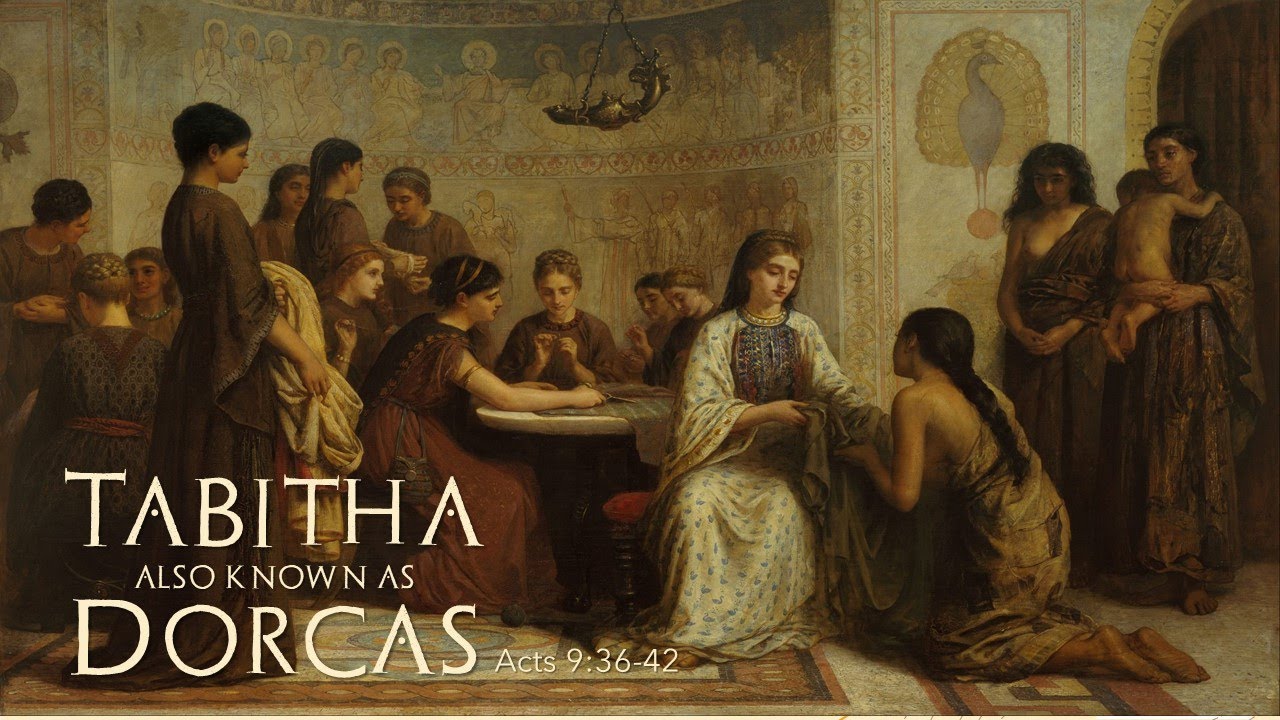
It was disheartening to me that already in the third century, male church leaders were grumpy about the widows. Perhaps, to use a twenty-first century overlay, this might have seemed to them parachurch activity and it felt threatening to them? Male church leaders wanted control over everything, including the activities of women within the church as well as those operating outside their supervision. We know that by the fifth century, the order of the widows was entirely disbanded, and the collapse of female ordination was well underway. We know that even with the rise of convents, popes reined in female influence by putting abbesses (but not abbots) under the authority of a priest, and confined nuns to their cloister.
Seismic Shift in Christianity
Emperor Constantine’s and Augustine of Hippo’s innovations changed the course of Christian formation from patience in the ferment of God’s invisible power to impatient use of force, which began with Constantine’s radical decision not to undergo a change of habitus and to treat baptism like a get-out-of-jail card. Their innovations continued:
- Imprisoning and killing people who did not join the now official church (pp. 267, 270)
- Acceptance of hypocrisy that wanted numbers of converts more than actual converts (p. 268)
- Aristocratic control of the mission and trajectory of the church (pp. 274–275)
- Exercise of the power of the state in church affairs (p. 275)
- Religious coercion (p. 276)
- The truncation of catechesis (p. 277)
- Different habits for clergy and laity (p. 278)
Augustine endorsed all this, though he used his influence to keep authorities from imprisoning and killing Donatists, at least. None of this came as a surprise to me, really, it just added data to what I have already read. That is to say, until I came to page 288. That just made me ill.
In a shockingly duplicitous manipulation, Augustine used Cyprian’s life and work as a way to add credence to his own fundamentally anti-Cyprian teachings. I can accept Constantine gutting Christianity of the power of a changed life (the process of sanctification), but it is Augustine who reassured his aristocratic friend that becoming a Christian need not require a changed life (p. 291).
Of all the good Augustine may have written (well, his book Confessions, anyway), this pretty well undid me.
Originally, when I completed this post, I felt all done in by what I learned. I mourned the loss of the earliest church’s beautiful faith practice. But after a good night’s sleep, I woke up with a sense of hope in the supernatural ferment of God’s Holy Spirit at work in believers.
How ready is the church—are we—to revisit Cyprian’s teaching on the habitus of faithful peace and patience?
In what ways can we encourage the reinstatement of women in partnership with men in every part of church life? What might be holding us back?

