

I am currently in a doctoral program, studying semiotics—cultural symbols—which requires a great deal of reading. Probably the greatest benefit of an education is the wise guide (teacher) who can give a curated tour of the best there is in any given subject, and such is the case with this program. Dr. Leonard Sweet has opened the door to an entire world of scholars and theologians who look beneath the surface of things and reveal mysteries. Now I would like to open that world to you.
The Abecedarium of Life in Christ
There are so many great thought-bytes in this book! For example, the second half of the book contains an Abecedarium of being a Jesus Human. Three words from that fascinating list, offered in Jesus Human, came together in my own mind as a way to build up the Body of Christ in communion with each other, each reaching into the past to find insight and energy for bringing the present into the future.
adiaphora
First, adiaphora speaks of compatibility, a willingness to remain flexible and resilient in discussing differences, a desire to find common ground and to accept diversity with gracious grace (p. 172–182).
guanxi
Secondly, guanxi expresses the wisdom of connection, noting that whatever is isolated will die (243–245). If the Church is a living body connected to Jesus as the head, or a temple made up of living stones established and held together by Jesus as the foundation and capstone, then the Church must find communion within itself (see 1 Corinthians 12:1–31 and 1 Peter 2:4–10). Just as God values deep relationship, so must each of us who bear God’s image, and are enlivened by God’s Spirit.
ostranenie
Finally, ostranenie, makes the familiar strange in order to see it afresh (p. 310–314). Each new chapter of the past, having only just been the present, provides opportunities for the Church to deepen and hone perspective.
Where I Take Exception
I will preface with a quote from this book that wisely cautions Christians to disagree in a way that still builds up the church, honors the other, and especially honors Jesus, our living Head.
When studying something, work with people you disagree with. Bring together quarrelsome and garrulous human beings under one roof and at one table.
Leonard Sweet, Jesus Human: Primer for a Common Humanity, 169
This is, of course, brilliant.
Not only will these garrulous people easily wax forth on their varying opinions, they will have no problem disagreeing with each other. What a rich engagement that is, with the material! Hold onto your socks. But also, we remember far more detail, and think much more about the topics from those engagements that have stirred up our emotions.
For example.
A Nit Concerning Anthropology
Page 128, discussing the organization of paleolithic and neolithic people groups as a way of understanding hierarchy, stirred up Big Feelings. I wrote a whole rant underneath the last paragraph (most likely, my inner person is both garrulous and quarrelsome. Certainly opinionated.). You can bet, though, I’ll be thinking about the kinds and qualities of relationships and connections people make these days. One thing about the pen of a provocateur, it writes as much to the heart as to the mind.
Not many pages later, there is an example given to illustrate agape love (pp. 186–187). As I read through the illustration, I could feel my hair catch fire. Honestly, it is astonishing that I am not bald, at this point.
A Bad Example of Love
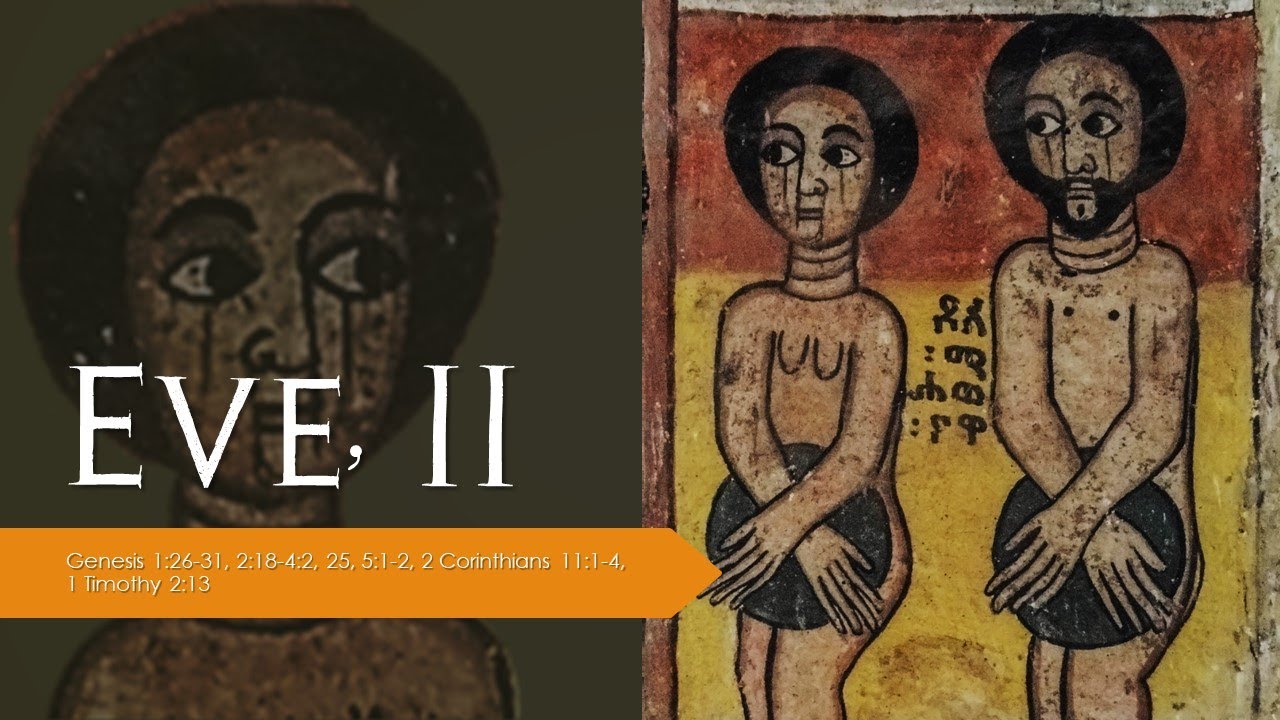
The setting is Genesis 3. The woman has just eaten of the Tree of the Knowledge of Good and Evil, and is now offering the fruit to the man. He takes and eats. Is it because he cannot bear to lose the woman? Was he sacrificing his relationship with God, his beautiful home in Eden, and perhaps his very existence, in order to remain united with the “flesh of his flesh, and bone of his bone”?
I have wondered for a while, now, where this reading of sacrificial love as the man’s reason for eating of the fruit came from. This is not even remotely how I read this text (the link below gives my take on this story).
And then I saw it.
“Oh,” I said to myself. Of course. Augustine. He is the first one to write about how sacrificially loving the man must have been, not wanting to be separated forever from his woman.
Pretty ironic, coming from him. He had agreed, with his mother’s urging, to send away his concubine and his love child so he could be available for a politically and religiously strategic marriage with a girl who was not of age. But he got bored being single, so he took on another concubine, then sent her away, too, for the same reasons (here is the story).
I would, in my garrulous way, rewrite pages 186–187 to reveal how very opposite the first man, adam, is from the second man, Jesus, and apposite the second man is to the first.
The First Adam chose himself (or themselves) when choosing to take hold of the fruit, disobeying God and bringing sin into the world, showing us the array of false, narcissistic loves.
The second Adam chose God when choosing to lay down his divine attributes, obeying God by entering our world and our humanity without ever sinning, to show us true agapic love, what God’s love means.
Something like that.
Because Jesus is the ezer perfectly suitable for all humankind, apposite and opposite to us in ways that are perfectly compatible, perfectly complementary, transforming our narcissistic loves into agapic loves.
Adiaphora
To be compatible does not mean to comply, nor even to be congruent (in agreement, harmonious). Possibly this is one of the most important teachings on how to live in community with our neighbors that our current expression of Christianity is missing, and I found it giving me pause as well. I will be thinking for a while about how to retain my own integrity while still being compatible with the world and people around me.
Several things came together for me as I read the second half of Jesus Human.
Contextual Reading
First, the style of this book is like consilience and the Japanese art of zuihitsu (pp. 342, 344). In a sense, it is like my own dyslexic way of reading. I take in all the letters offered in the word and notice its context, and out of that comes meaning. This book, taken as a whole with all its many conversations and observations laid down next to each other in mindful contextualization, brings meaning. It is experiential, becoming its own metaphor for the fractals and diversity of every Jesus human, and the Body of Christ. I deeply appreciate being taken on this journey in this way.
Secrets of the Orthodox
Next, the secret of the Orthodox quotes throughout the book (which I have been grateful for, as we have much to learn from our eastern brethren and sistren) is revealed when, at the end, the center of truth is spoken through the lips of a centenarian,
Everything Jesus did he did as a human. Everything.
Leonard Sweet, Jesus Human: Primer for a Common Humanity, 445
The supernova power of that statement would not have had nearly the impact it did without my having read through the whole book. I, too, have wrestled with the Godness and humanness of Jesus for most of my life, and I heartily agree with Sweet that the scriptures require me to hold these seemingly opposite concepts, called truths, with open hands, together (p. 375). They are irreducible, they are not to be blended or conflated, they are beautiful and complete as they are. Though Jesus is within me, he is also with me. Jesus’s Spirit binds me to all other Jesus humans, and Jesus’s humanity binds me with all other human beings.
Gift of the Garden
Third, we return to the Garden, which has been mentioned throughout, and now the Tree of Life is given a meaning new to me.
You can’t be human without God. That’s what the Tree of Life meant in the Garden—God’s ongoing gift of participation in the divine life as the essence of what it means to be human.
Leonard Sweet, Jesus Human: Primer for a Common Humanity, 446
A steady diet from that tree, walks in the Garden with the Lord, and an invitation to think critically about Serpentine arguments—the ingredients were already there to grasp good and evil. And we have those ingredients now, too.
Be compatible without being congruent or compliant.
Importance of Metaphor
And this is why it is so important to me to understand our stories well (p. 424). I have been reading the Bible ostraneniely for years, now, because we absolutely do live out of our stories (p. 313).
Get the metaphor right and everything else falls into place. Get the metaphor wrong and everything falls apart.
Leonard Sweet, Jesus Human: Primer for a Common Humanity, 354
I underlined that so vigorously I nearly put a hole through the page.
At the end of the book are prompts for self-reflection, one of which, #19, asks the reader to think about how the stories of their lives have shaped them. I believe this is one of the most important questions we can ask ourselves. In fact, I even made a video about it.

The final two pages on being faithful are a fitting completion of this book while offering the same hint of continuing chapters that the Book of Acts offers. God has given each of us a clapper, and with patient perseverance, I will be ringing my bell, trusting in the ferment of God’s invisible power.

