
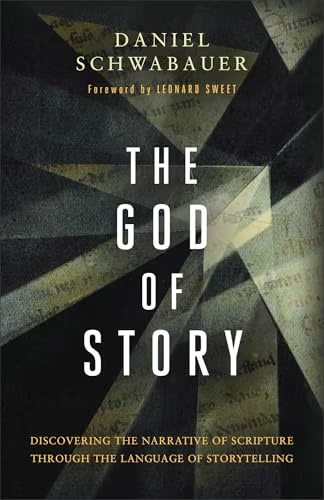
I am currently in a doctoral program, studying semiotics—cultural symbols—which requires a great deal of reading. Probably the greatest benefit of an education is the wise guide (teacher) who can give a curated tour of the best there is in any given subject, and such is the case with this program. Dr. Leonard Sweet has opened the door to an entire world of scholars and theologians who look beneath the surface of things and reveal mysteries. Now I would like to open that world to you.
The Truth About Sheep
A big misunderstanding has arisen in the west about what “sheep” meant to the ancient near easterner. Somehow, from somewhere, westerners got it into their minds that the leading edge of that metaphor had to do with sheep being stupid dumb, completely unable to care for themselves, and therefore in need of managing. Whether that is true is not germane.
To the ancient shepherd, sheep were beloved.
They were cherished, they were held dear. The shepherd does not leave the ninety-nine safely in the fold in order to find the one sheep that is lost or caught in the brambles somewhere because it is stupid. The shepherd does not give each sheep a name because sheep are stupid. The sheep do not come to know the shepherd’s voice because the shepherd thinks the sheep are stupid.
Jesus’s Tender, Compassionate Love for His Flock
So, Jesus’s heart goes out this youngest generation as a shepherd might to beloved sheep who are caught in the snares of electronic devices, who have never learned their worth to the Lord of the Universe, who are terrified of learning about their own faults and failings because they are already so alone and lonely, and sense they do not really belong anywhere or to anyone. They cling to the fragile hope that if they at least appear to fit in, maybe they will be accepted.
Hope
Jesus would feed them. He would feed them love and belonging, he would feed them courage. Then he would present to them adventures so they might learn where they need to grow in order to enter into the adventure. They would learn that in discovering sin (which is as much about being incomplete, about being immature, in character) they have discovered hope, because Jesus came to heal the sick, bind up the broken-hearted, cleanse the leper, and yes … when they are ready … forgive and restore the sinner.
Worth
Growing up in a shame-based culture has its pros and cons. But a big con is that for the shame-encumbered, taking on any more shame is completely untenable. It must be avoided at all costs. So, we start with where that person actually is, and we do not pummel them with shame, guilt, and the horror of God’s judgment. We start with the restoring love of Jesus.
Err on the Side of Love
Listen, I could be completely wrong.
This is where I think the Lord has me right now, and this is what I am going with. Right now, in my current iteration, I would rather face the Lord’s chastisement over being too soft with someone, waiting too long to gently guide them into the truth about a sin they have been avoiding facing, rather than crushing what little spark they had left with the hammer of judgment.
We fear normalizing sin because we do not want people to get the idea that sin is condoned, or that we, in some way, as pastors have gone soft on sin, or that we are lowering the bar on sin, or that we have re-assigned what might be considered sin.
So, parents refuse to attend the wedding of their grown child because [they’re gay, or marrying someone outside the faith, or class, or culture …]. We are quick to remind the congregation, after a confession, how terrible the sin is. But Brother Lawrence really was not like that at all. He took sin in stride without in any way being “soft” on the subject of sin.
I have decided that, at least for now, I will do no judging but instead pray that Jesus will do the convicting in his time in his way, and I will, in the meantime, be warm, supportive, and ask questions instead of make statements. Even convicting passages in scripture are to be read with questions, not statements of principles and applications. If God is for real, and God’s word still speaks, then we can be confident God’s power will also continue to be at work. It is the Holy Spirit Who does the convicting, the enlivening, the softening, the quickening, the restoring, and the raising up. None of that is mine.
Still, it is tough, is it not, trying to find the right balance, keeping integrity, being loving shepherds who pastor with and for Jesus, having courage to say what is true and to speak with authentic love.
Transformed by Story
The stories embedded in the second half of The God of Story were a surprise bonus. Schwabauer is an engaging writer, I enjoyed being taken into his imaginary realm to revisualize the healing of the blind man, Daniel’s spiritual crisis, and Christus Victor (which, in my opinion, is the way forward for telling the Gospel in today’s time). I especially appreciated the three ways a story can be told, and how Jesus’s story embodies all three archetypes.
We are formed, even transformed, by stories. As Schwabauer contends,
“We have no immunity against a powerful story, even when that story is communicating something that contradicts our worldview” (145).
Certainly, this is how Paul drew his listeners in on the Areopagus. He told the story of the Unknown God so well that, even though most scoffed in the end at the idea of a resurrection, some inquired further. Their worldview had become porous from the telling of a very good, a powerful story.
I’d been thinking about Professor Sweet’s concern that Schwabauer had posited power versus principle throughout his book, rather than power versus presence. Looking back, I think Schwabauer got it just right with the story of Job. The principle, perhaps, at stake was why Job might love, honor, worship, and obey God. Was it because of God’s gifts (power)? Or was there some other intangible principle at play? God’s presence, the high point of the story, is the intangible principle of the mark of God’s love for Job, Job needed no more answers.
In reading the rest of the book, I could see how Schwabauer was addressing both the intangible principle of goodness and love as well as the living presence of God, all embedded in the tree of life, and power, representing the tree of knowledge. He spells it out for our reading of Daniel, missing the prophet’s relationship with God when
“… we read Scripture looking for the presence of propositional truth rather than its presence in the form of a Person”
Daniel Schwabauer, The God of Story, 169
That sounds like a Leonard Sweet line!
“Paying the ultimate price” for goodness, whether or not there is earthly victory resonates with us, because that is what God has written into us as image bearers
Daniel Schwabauer, The God of Story, 146
Yes, we have been conditioned to read, study, and teach the Bible as “an anthology, a collection of holy fables and moral precepts and puzzling aphorisms,” but I think there are also those who have been moving away from that (p 159).
- Reading the Bible in a year, which places Hebrew texts with Christian ones, works its way through the Psalms and Proverbs at regular intervals, and so on, teaches us how the Bible actually hangs together as a metanarrative.
- The Chronological Bible attempts to give us the whole story in a linear fashion, which is suited to the western mind.
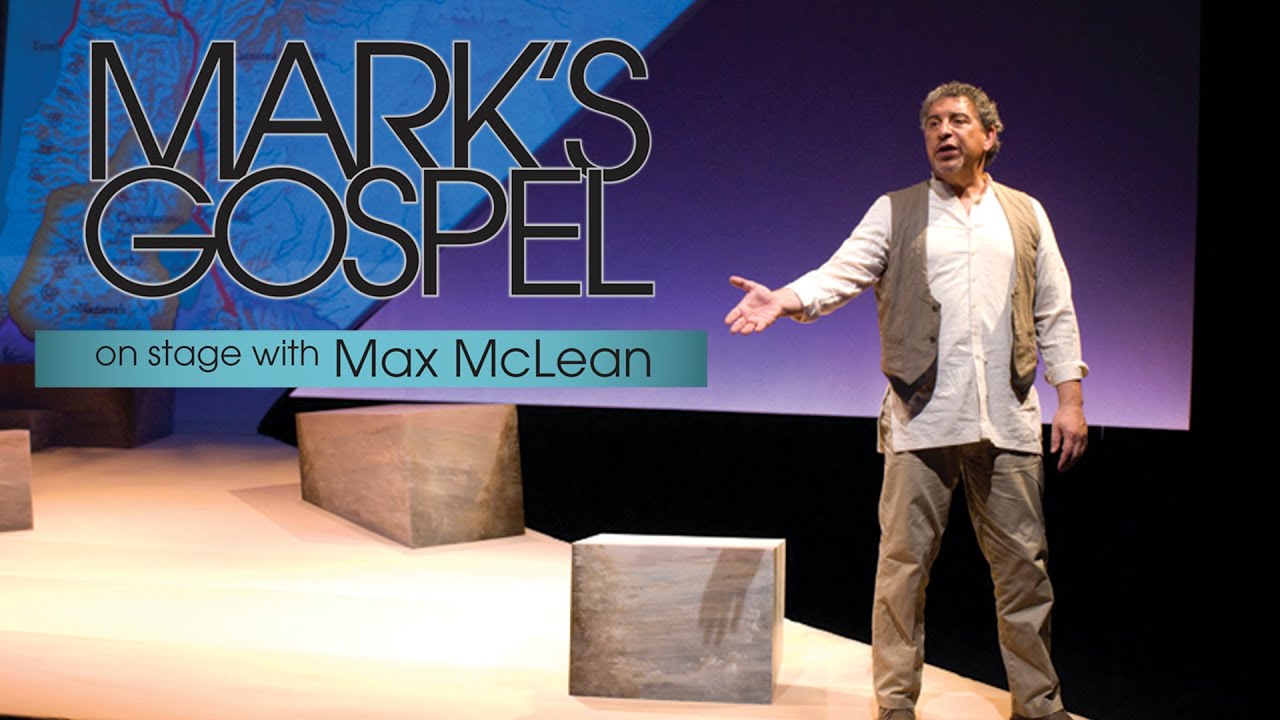
- My mind was blown, years ago, watching the Gospel of Mark by Max McLean. It is downright brilliant. I had never really gotten Mark until I did that.
Two Stall-outs for Me
There were really only two places where I stalled out in this second half.
The Meaning of a Sign
The first was in the discussion of the sender, the sign, the message, and the meaning. It is a nit, but it stopped me cold and I had to really think about it: the “sign” being “the delivery mechanism” such as an email or letter (p178). So we interpret the mechanism? That immediately conjured up, for me, Sherlock Homes examining the paper quality, the watermark, the folds and smudges.
I finally had to emend that line to say that it is the words which comprise the sign that we interpret. Perhaps there is more information embedded in the fact that the words were conveyed via email rather than voicemail or text (or what-have-you). But the main sign is found in the words, and the message the words convey, which may (or may not) be rightly interpreted.
That said, I very much appreciated Schwabauer’s point that our lives are a sign sent by God to the world, and why that truth might not sit well with someone.
It goes back to my own discussion of agency versus victimhood. Are we mere pawns in the hands of God? Are those of us who have been shredded and trampled simply sad sacks who were (unfortunately for us) fashioned for abuse as some sort of “message” God would like to deliver to the world? Are we collateral damage, as it were, in God’s messaging, or worse, God intended that we should pummeled, just as the Son was pummeled and slain, but without our consent?
Perhaps no one else here has had to deal with such questions, but I have had to.
It takes a lot of thinking, and counseling, and praying, and growing to find another perspective.
Nevertheless, I agree with Schwabauer’s conclusion, though I tend to resist binary choices. In this case, the sender can only be God, or Satan, or myself—and when I choose myself, I unwittingly choose Satan (John 3:18).
So, if God is the sender, and my life is the message, then what does that mean? What will the world interpret from my life?
God’s Sovereignty
Have I mentioned that I am, at best, a TP Calvinist?
At best.
But, there was a time when it was my job to teach Calvinistic theology, and I still have that rattling around, deep inside me. Here is a very familiar clip: God is sovereign. God is in control of God’s universe, and there is nothing outside the scope of God’s rule. God determines the outcome of all things, and the outcome of all things is always in accord with God’s wise purposes.
So, then I read,
“Just as conferring free will to his creation must have required a massive risk on his part, so too was it risky to share his personality through the story arc of Scripture. He was bound to be misunderstood”
Daniel Schwabauer, The God of Story, 183
A Calvinist would have tsked tsked and made remarks about election and predestination (which I probably would have myself done at one time, yet inwardly felt wrinkled and uncomfortable).
We are not going to get the story arc of Scripture if we do not feel, keenly, the risks God has taken all along the way, beginning in Genesis 3. Primal Intelligence tells me God’s resilience and mastery makes taking risks, even colossal ones, possible. But they are risks, nonetheless. Schwabauer’s assessment of the church is well-taken (pp 198–201). We have left untold half the story, and because we have, we have lost our audience. We have even eroded away many of our own.
Upon What, or Whom, Is Our Faith Centered?
The only other place I got stalled out was when Schwabauer concluded that
“… the center of our faith isn’t a set of doctrines or propositional truths but a story—the story of Jesus”
Daniel Schwabauer, The God of Story, 250
Huh? Wait, whut?
The center of our faith is a story? A STORY???
I wish he had not written that in quite that way. I am, when it is all said and done, a very concrete thinker. Jesus is at the center of my faith, the God-Man. I knew Jesus well long before I knew his whole story, Jesus’s story is how we are introduced to him, just as the emcee introduces the speaker. We can appreciate who we are going to hear from. But we do not know that person until we experience that person.
One Last Teeny Little Nit
This is one last nit. Schwabauer wrote at regular intervals about the importance, the necessity even, of hearing the Gospel, and listening to the story. I appreciate that, I really do, and I am as much an aural person as I am visual. But hearing cannot the critical sign mechanism, or Helen Keller would not have been a Christian (and she was). The story is the sign, so no matter one’s physical disability, receiving the story is the crucial thing.
So, if your life is a sign from God to the world, what is the message the world is to interpret of you?

